
San Diego, CA
Status
Built
Pavilion
Type
16 SF
Size
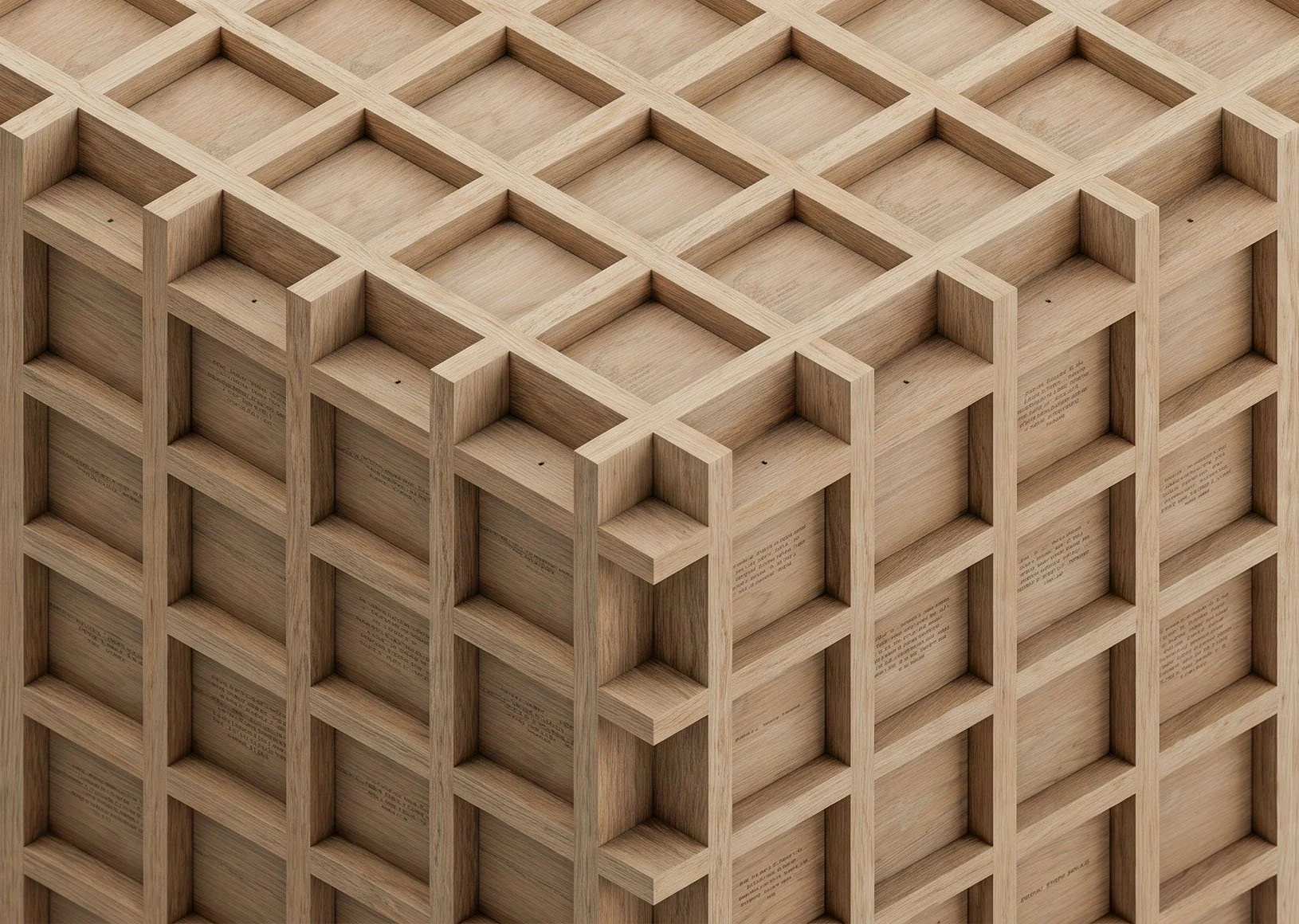
This installation is constructed of 2” x 4” wood posts and 210 rotating plywood panels, creating a lightweight architectural volume that invites participation and discovery. The panels are designed to be rotated by hand, encouraging visitors to physically engage with the pavilion and explore the statistics and connections that define the binational region. As people move through the space, they can reconfigure the installation, revealing new information and perspectives with each interaction. Rather than being a static object, the pavilion becomes a shared educational experience that sparks curiosity and dialogue of the relationship between the two cities and cultures it represents.
Each surface contains paired information connecting the cities of San Diego and Tijuana. One side presents a fact, story, or cultural reference from the San Diego border region, while the opposite side reveals a related counterpart from the Mexican side of the border. Some relationships are geopolitical, others economic or environmental, while many are playful highlighting the shared everyday realities that exist across both cities.
The project approaches the border not as a fixed line, but as a living condition defined by exchange and constant movement. The continuous rotation of the panels symbolizes the daily flow of people, culture, labor, commerce, language, and identity moving back and forth across the border.
While the installation is primarily meant to be experienced from the exterior, visitors are also able to enter the structure and inhabit the constantly changing interior environment created by the movement of the panels. As the panels rotate, they produce a flickering atmosphere of light and shadow.
Access into the installation occurs through a confined 25” x 45” crawl space. Entry is intentionally uncomfortable, serving as a subtle reflection of the realities surrounding border mobility. For some, crossing between borders is effortless; for others, it is physically, emotionally, and politically difficult. The act of entering the installation becomes part of the narrative itself not as spectacle, but as a reminder of the friction within border conditions.
Constructed using U.S. wood-framing techniques, the project begins with materials purchased in San Diego for their finer quality. The materials are then transported across the border to Tijuana, where the structure is fabricated and assembled, taking advantage of the skilled workforce and low cost labor. Upon completion, the installation crosses the border once again to be exhibited in San Diego, physically embodying the economic and cultural interdependence of the two cities.